
20-Second Summary
The Digital Advice teaches link building through the proprietary 5-Phase Link Building Maturity Model:
- Phase 1 (Foundation) helps you understand backlinks and white-hat link-building strategies.
- Phase 2 (Diagnosis) teaches you to audit your backlink profile and identify toxic backlinks.
- Phase 3 (Execution) guides you through creating linkable content and executing guest posting and broken link building.
- Phase 4 (Optimization) shows you how to measure link quality and scale high-quality links while removing bad backlinks.
- Phase 5 (Authority) helps you build a sustainable link-building engine and compound your domain authority over time.
We cover all link-building strategies, including anchor text optimization, niche edits, resource pages, how to identify private blog networks and low-quality directory links, and how to avoid mass backlink mistakes.
Whether you’re a beginner learning what backlinks are or an expert scaling your link-building campaign, this guide shows you exactly where you are in the link-building maturity journey and what to do next.
This is The Digital Advice’s complete guide to building quality backlinks that won’t get you penalised, will improve your search rankings, and will establish lasting topical authority in your niche.
THE LINK-BUILDING MATURITY MODEL
Link building has changed in 2026. What worked five years ago will not work today because of the evolution of the search engines, which have made the restrictions really strict around penalties against link-building manipulation.
Most of the link-building strategies present online are outdated or vague. We will not just promise quality backlinks, but also tell you how you can earn them based on white-hat
At The Digital Advice, we believe link building should be clear, strategic, and grounded in how search engines actually work in 2026.
In this guide, we are going to introduce the 5-Phase Link Building Maturity Model, which is a proprietary framework that guides you from confusion (Phase 1) through mastery (Phase 5), ensuring you never waste time on tactics that don’t work.
Here’s what makes this model different:
Since most blogs talking on this topic go straight to the strategic tactics without realizing at which stage of link-building you are, as per your knowledge. Digital Advice is going to differentiate and work on the recognition of the phase you are in.
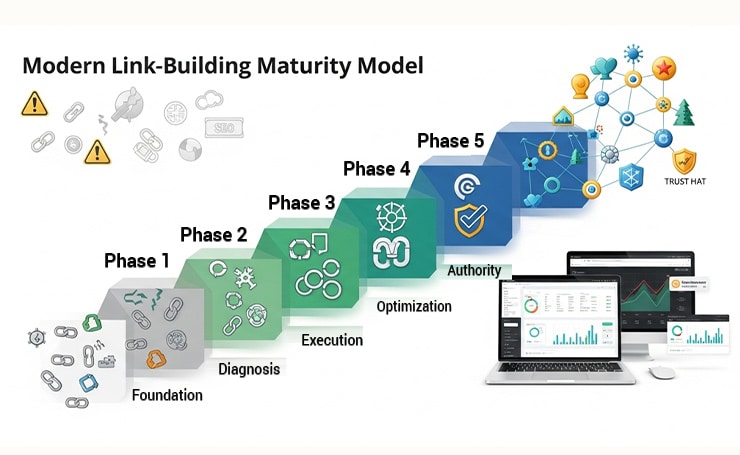
The link-building success depends entirely on which phase you’re in:
- Phase 1: You’re confused about fundamentals.
- Phase 2: You need to audit before you act.
- Phase 3: You’re ready to execute strategically.
- Phase 4: You need to scale what works.
- Phase 5: You’re building lasting topical authority.
Do not skip a phase if you are a beginner. Follow them in the same order as mentioned to build the quality backlinks.
PHASE 1: FOUNDATION (Know What You’re Actually Doing)
This is an initial phase where you are unclear about the idea of backlinks.
- You are unaware of which backlinks matter and fear that you might get penalized.
- You are also confused about white-hat link-building strategies vs. black-hat.
We will understand the fundamentals s that you do not move next without learning to avoid making any costly mistakes.
What Are You Actually Building? (The Concept Clarity)
A very simple definition exists: a link from one website to another is called a backlink, but it is not that simple. A link from another website means that the websites linking to you are giving a signal to search engines that this website is valuable, hence we are referring to it.
In 2026, search engines like Google use backlinks as one of the top ranking factors because:
- Backlinks indicate the popularity of your website, stating you are valuable, hence being referred to by other sites.
- Backlinks from other trusted websites show that you are trustworthy.
- High-authority sites linking to you boost your domain authority.
- Backlinks also drive referral traffic, as they are not just SEO signals.
But not all the backlinks hold the same values. A quality backlink from a website like The New York Times is worth more than 100-plus backlinks from low-quality websites. Also, having a single backlink from a spammy website could hurt your SEO and get you deranked.
This tells you why understanding link-building strategies is essential before you start building anything.
The Types You Need to Know (Not All Types Matter Equally)
There are multiple types of backlinks. Understanding which ones exist helps you recognize quality when you see it.
Natural/Relevant Backlinks provide the highest value, and they include:
- Editorial backlinks come from the journalists or publications that choose to link because your content is valuable.
- Guest posting backlinks come from those articles you write for other websites in the same niche.
- UGC backlinks come from the forums, reviews, or community discussions where users mention your work.
- HARO/PR backlinks come from being featured as an expert source in publications.
- Directory backlinks come from the niche-specific, high-authority directories.
- Resource page backlinks come from the curated lists of best tools and guides.
- Image backlinks come from the infographics or visuals from your website and social media content that others share and link to.
- Testimonial backlinks come from leaving reviews on tools or services you use, which get featured on the business site with a link to your website.
Social Backlinks provide supportive signals, and they include:
- Links from social media platforms.
- These are nofollow, but signal your brand’s authority.
The White-Hat vs Black-Hat Reality Check
Before you even think about building links, you need to understand which tactics work in 2026 and which will destroy you.
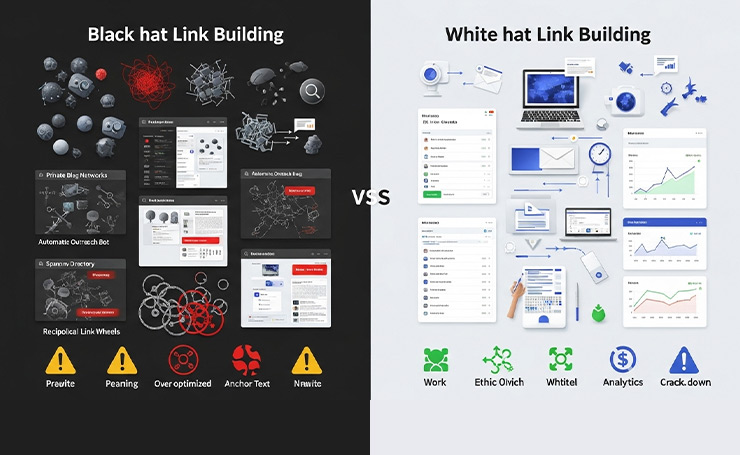
Black-hat tactics to avoid include:
- Buying links from private blog networks.
- Mass backlinks from low-quality sources.
- Using automation tools for outreach.
- Creating low-quality directory link submissions.
- Participating in reciprocal link exchanges.
- Sidebar links from unrelated sites.
- Over-optimising anchor text with exact-match keywords.
- Creating link schemes or link wheels.
Why don’t these work in 2026?
Google’s algorithm in 2026 detects these patterns:
- Link velocity spikes, which mean getting 50 or more links in the same month, can make you look unusual or phishy.
- Low-quality referring domains.
- Toxic or spammy links from known problem sites.
- Exact-match anchor text over-optimization.
- Private blog networks.
- Unnatural link patterns.
Why you need to consider these is because they cause position drop and deranking, and it can take you almost 6 months to a year to recover.
Choose White-hat tactics like:
- Creating valuable content.
- Earning links through relationships based on the relevant content.
- Building links slowly, i.e., focusing on gaining five to ten quality backlinks each month.
- Use varied anchor text that looks natural.
- Focus on domain authority with relevance rather than building quantity of backlinks.
- Monitor your backlink profile for bad backlinks and remove them.
White-hat link-building strategies help you to maintain a healthy backlink profile, allowing your website to get ranked and build authority in its niche without any penalty risks.
This completes our Phase 1, and with this understanding of backlinks, we are ready to move towards Phase 2.
PHASE 2: DIAGNOSIS (Know Where You Stand)
If you are in this phase, then you:
- Understand the basics of link-building.
- You already have some existing backlinks, and you are not aware of whether they are helpful or not.
- You need to assess your current backlink profile for a clear idea and foundation before starting to optimize for a quality link profile.
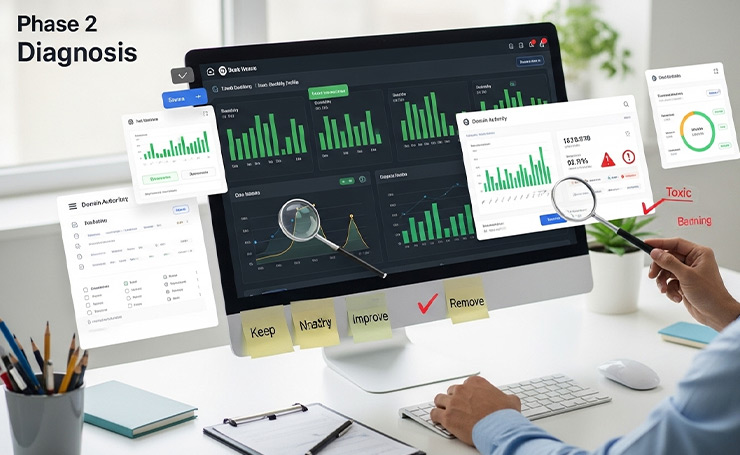
At this phase of our strategy, you will understand where you stand already and what is working for you, and what is toxic and needs removal.
Audit Your Current Backlink Profile
In order to build new backlinks, you will have to first audit your backlink profile, and for that, ask yourself the following questions:
- How many backlinks do you currently have?
You can use Google Search Console for free to find this number, and it’s alright if it is lower than your expectations.
- From which domains are they coming?
The links must be from highly authoritative sites, reputable sites, and definitely not from any low-quality sources.
- What’s your current domain authority?
You can check this with Moz’s domain authority checker or similar tools. This is your baseline.
- Are there toxic links hurting you?
Some of your backlinks might be from private blog networks, spam sites, or low-quality directory link submissions. These can cause more harm than help.
- What’s your anchor text distribution?
If 70% of your anchor text is exact-match keywords like “link building strategies,” that’s over-optimized and risky. You will need to use a variety of anchor texts to include some branded terms, generic texts, and natural phrases to make a healthy anchor text distribution across your profile and blogs.
- Which of your current links are actually driving traffic?
Use Google Analytics to track referral traffic from your backlinks.
This audit will give you a foundation from which you can move forward.
Identify the Toxic Links You Need to Remove
Identifying the toxic links is important because a single bad backlink can diminish the value of ten good backlinks.
You have toxic backlinks if they come from the following sources:
- Private blog networks
- Spammy, low-quality directories
- Malware-infected sites
- Completely unrelated industries
- Known spam sources
At The Digital Advice, we recommend:
- Identify toxic links using tools like Ahrefs or SEMrush.
- Contact the site owner first and request that they remove the backlink.
- If they don’t respond, disavow. To do so, you can use Google’s Disavow tool to tell Google to ignore that link.
This process takes time but is essential. Bad backlinks are actively hurting your rankings in 2026.
Analyze What’s Working (Your Competitive Advantage)
Here’s the insight most link-building guides miss:
Your current backlinks are also important because they tell you what is working for you in your niche industry.
Notice the following factors when assessing your existing backlinks:
- Which of your current links improved your search rankings the most?
- Which links drive the most referral traffic?
- Which came from what sources (publications, guest posts, directories)?
- What do your best links have in common?
This data is gold. It tells you exactly what to double down on in Phase 3. With this information, you are well aware of your starting point, problems, and the perks, which makes us ready for Phase 3.
PHASE 3: EXECUTION (Build With Confidence)
If you are already in this phase, then you are actually ready to build backlinks.
- You have an idea and a plan, but need guidance for execution.
- You want step-by-step instructions for guest posting, broken link building, or other strategies.
- You need confidence that you’re doing it right.
- You want results in realistic timeframes.
In this phase, you will get to learn how to execute the link-building strategies.
The Digital Advice 3-Pillar Execution Framework
In this phase, you are ready to build quality backlinks for your website. For carrying out this, we will use The Digital Advice 3-Pillar Execution Framework.
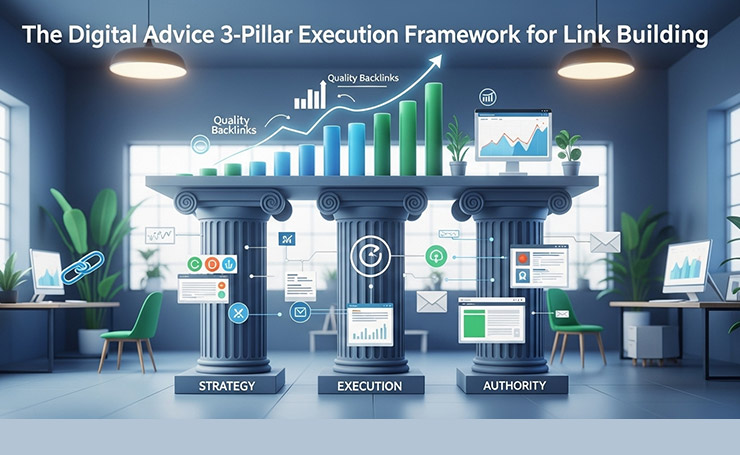
Link building success comes down to 3 pillars:
Pillar 1: Content Worth Linking To
Not having valuable content is not negotiable in the 2025 SEO and link-building framework. Not only have the search engines become smart, but the authoritative sites also do not link to mediocre content.
A valuable and linkable website content framework includes:
- Original research or data that is not already available.
- Comprehensive and in-depth guides on specific topics you are targeting for ranking.
- Comprehensive and in-depth guides on a topic.
- Free tools to solve problems. Like: calculators, generators, or checkers.
- Case studies showing proof of results achieved.
- A unique methodology developed by an expert on your website.
- Visual assets, like Infographics, charts, or data visualizations.
Having all of these is not essential. You can pick one alongside your content and improvise it. Most successful link building in 2026 comes from websites that master one content type:
- Tech companies can build tools.
- Media outlets can provide original research.
- Agencies can showcase their original achievements for their clients in the form of case studies.
- Educators can provide comprehensive guides.
What’s YOUR content type?
At The Digital Advice, we recommend:
Start with the content that aligns with your strengths. If you’re a researcher, do original studies. If you’re a writer, write the definitive guide. If you’re technical, build a tool.
Master one type, earn backlinks naturally, then expand.
Pillar 2: Relationships With People Who Link
Backlinks are gained from people, not the algorithm, hence building long-term relationships can increase your cold outreach conversion rates of a mere 2-3% to 15-25%with long-term relationships.
Hence, focus on building relationships. You can do that in four steps:
- Identify 20-30 people, including publishers, journalists, bloggers, and industry leaders in your niche.
- Follow their work for 3-6 months, and engage with them.
- Build genuine relationships by sharing their content, mentioning them, and providing value to them.
- Then, once you have established a bond and created valuable content, pitch it with a personalized approach.
This might seem slower than cold outreach, but it has five to ten times more potential, because people who know you already are more likely to say yes.
Pillar 3: Strategic Outreach (When You Have Value)
Having the right relationships and high-value content, you can plan your strategic outreach.
Strategic outreach includes:
- Guest posting: Writing for other sites in your niche
- Broken link building: Finding broken links and replacing them with your content.
- Resource page outreach: Getting your content listed on curated resource pages.
- HARO/PR: Responding to journalist queries and getting quoted.
- Digital PR: Building relationships with media and getting featured.
The Execution Timeline (Realistic Expectations)
Below is a realistic execution timeline for different backlink elements:
| Link-Building Element | Realistic Timeline in 2026 |
| Editorial links from major publications | 3 to 6 months, sometimes longer |
| Guest posting placements | 2 to 3 months lead time |
| Broken link building opportunities | 1 to 2 months |
| Resource page backlinks | 1 to 3 months |
| HARO or PR coverage | 1 to 3 months per placement |
| Healthy link acquisition velocity | 5 to 10 quality links per month |
| Initial search ranking improvements | 2 to 6 months |
| Full Phase 3 execution window | 3 to 6 months before Phase 4 optimization |
What this means in practice:
- Don’t expect 100 links in 30 days.
- Don’t expect search rankings improvements in 2 weeks.
- Do expect slow, steady growth that compounds over time.
- Do expect results that last.
The Anchor Text Strategy (How to Avoid Penalties)
Your backlink profile’s health is also dependent on the anchor text distribution.
Why?
Because if your website has backlinks with fifty percent of them having the same anchor text, this appears as a manipulative ranking intent behind building those backlinks.
Google does not just analyze your backlinks but also their anchor text distribution.
Editors, journalists, and site owners use different words, brand names, URLs, or generic phrases, not similar anchor text.
- A healthy anchor text profile looks like:
- Mostly branded anchors and naked URLs.
- A mix of generic phrases like “this guide” or “learn more.”
- Partial match keywords are used sparingly.
- Exact match keywords are used rarely, if at all.
The Digital Advice advises you to:
- Let anchor text happen naturally in guest posting and outreach.
- Request varied anchor text in strategic placements when possible.
- Never over-optimize, as it can trigger penalties.
- Monitor your anchor text distribution monthly to check if any text is getting repeated a lot.
Phase 3 is complete. You’ve created linkable content, built relationships, and executed strategic outreach. You now have quality backlinks coming in.
PHASE 4: OPTIMIZATION (Scale What Works, Kill What Doesn’t)
This is the phase where you have already been building the links for a few months, with some strategies working, and others not.
- You need to identify what’s actually driving search rankings improvement.
- You want to scale what works and remove what doesn’t.
- You need to protect your backlink profile from toxic backlinks.
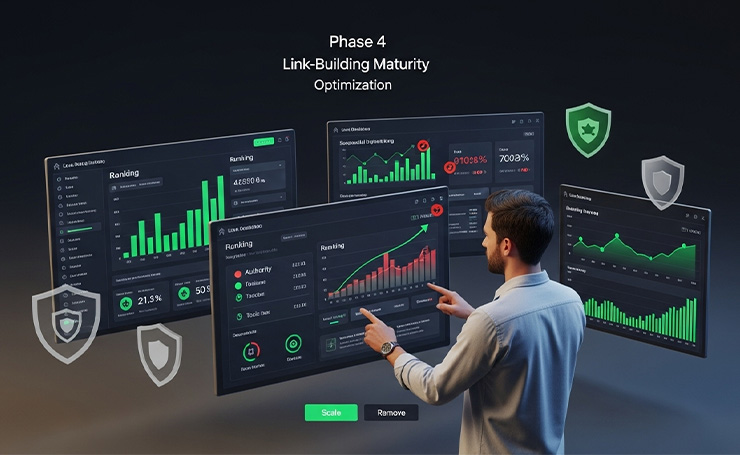
In this phase, we will protect your website’s authority and double down on the high return on investment tactics.
Measure What Actually Matters
Now that you have created backlinks, you must measure how much value they are providing compared to their numbers.
Track:
- Links acquired per month.
- Referral traffic from backlinks.
- Search rankings improvement tied to link building.
- Domain authority growth.
- Toxic or spammy links are identified and removed.
Use Google Analytics to track referral traffic. Use Google Search Console to track search rankings improvement. Use premium tools like Ahrefs to track domain authority.
The Digital Advice Optimization Framework
In order to be efficient and to avoid wasting time on building backlinks that do not add value, test your every link-building strategy and check it for four factors:
- Did it work? Yes, if you have quality links.
- How much effort? The amount of time and resources spent on them.
- What was the ROI? How many links were gained for the effort?
- Should you scale or stop? If the tactics used gave a good ROI, then scale. IF they required more tactics but did not work, then stop.
As per The Digital Advice, this is how you become efficient and avoid wasting time.
Identify and Remove Bad Links
As you scale link building, you’ll sometimes accidentally accumulate bad backlinks.
These bad links come from the following sources:
- Private blog networks.
- Low-quality directory links.
- Unrelated industries.
- Known or unknown spammy sources.
Or sudden spikes in link velocity from suspicious sources can also indicate bad backlink accumulation.
To prevent them:
- Identify them monthly.
- Contact site owners for removal.
- Disavow the ones that won’t be removed.
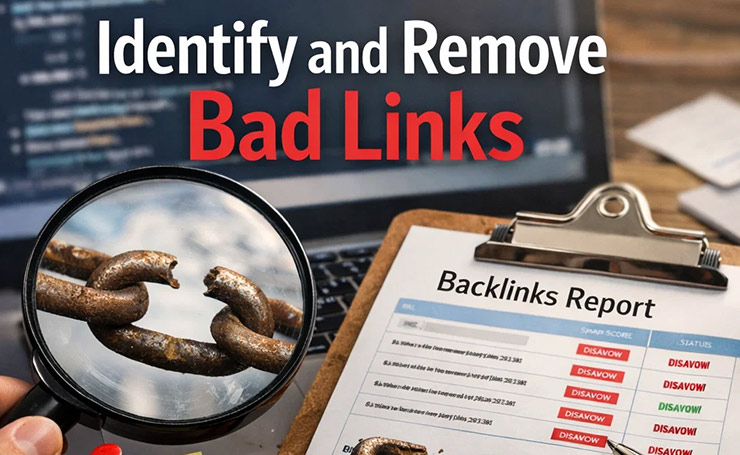
This ongoing maintenance prevents penalties and keeps your backlink profile clean. And with this practice in action, you complete phase 4 and are ready to compound your gains and dominate in your niche.
PHASE 5: AUTHORITY (Compound Your Gains & Dominate)
If you are in this phase, you have a solid backlink profile, and you want to compound on it and become the topical authority in your niche, so that everyone links to you naturally, and your topical authority is retained long-term.
Our goal here will be to create a sustainable link-building engine that compounds over the years.
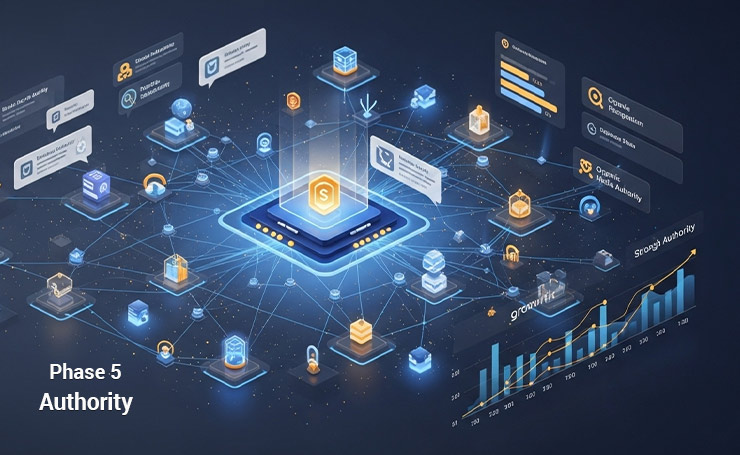
The Compound Growth Strategy
Here is how you can compound on your backlink profile growth in a time period of 1 to 4 plus years:
- Year 1: Build a foundation by getting 10-20 quality backlinks from authoritative sites.
- Year 2: Scale what works and acquire 30-50 quality backlinks.
- Year 3: Build 100+ quality backlinks for improved authority status.
- Year 4+: Gain domination and opt for 500+ quality links from authorities.
The sites ranking #1 in 2026 will be the ones building their profiles strategically with slow growth, rather than using manipulative tactics and trying to do it in two to four months.
Build a Link-Building Engine, Not One-Off Campaigns
The goal here is not to use the on-off campaigns where you build links for three months and then stop. Rather, create a link-building engine or system where you are building links systematically, month after month.
A link-building engine means:
- Consistent content creation for linkable content.
- Ongoing relationships with reputable sites and authoritative sites.
- Regular, systematic outreach.
- Monthly monitoring and link profile maintenance.
Become the Resource in Your Niche
Becoming the resource in your niche is the endgame of link-building strategy in the year 2026. By Phase 5, you’re not just building links. You’re becoming the go-to resource.
Signs you’ve reached Phase 5:
- Your content gets linked to naturally.
- Journalists reach out to you.
- Industry blogs reference your work.
- Your brand becomes synonymous with your topic.
- Links come because your authority is established.
But your consistent link-building and link monitoring must never stop, even if you have compounded on your strategy and gained a topical authority, because your competition is trying to reach the same stage all the time.
THE DIGITAL ADVICE LINK-BUILDING PLAYBOOK
Below, we have curated the playbook, showing how each of your link-building phases can work out in the first year, with a short step-by-step instruction to get to your topical authority phase.
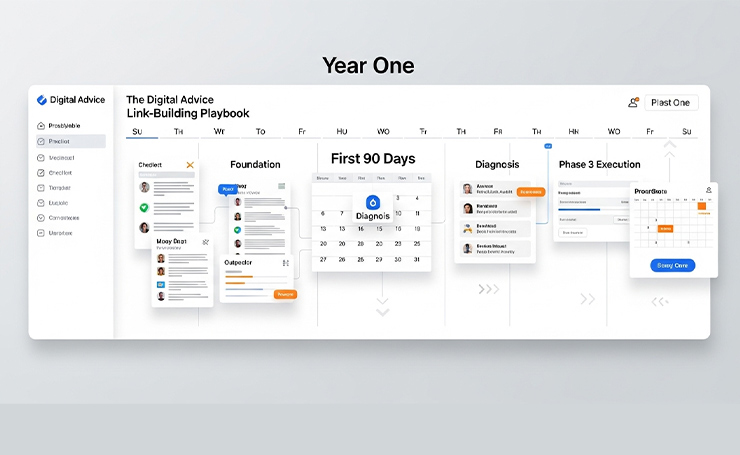
Your First 90 Days (Phase 1-2 Focus)
Your phase 1 to 3 will be completed in 90 days
Month 1: Foundation + Diagnosis
- Week 1-2: Learn the basics (what backlinks are, types, white-hat vs black-hat).
- Week 3-4: Understand your niche’s link-building requirements.
- Deliverable: Clear understanding.
Month 2: Begin Phase 3 (Execution Planning)
- Week 1-2: Audit your current backlink profile.
- Week 2-3: Identify toxic or spammy links.
- Week 4: Identify what’s already working.
- Deliverable: Clear baseline and insights.
Month 3: Begin Outreach
- Week 1-2: Choose your linkable content type.
- Week 3-4: Identify 20-30 target people or publications, and start relationship building.
- Deliverable: List and engagement plan ready.
Months 4-6 (Phase 3 Focus)
You can expect 5-10 quality backlinks this month.
- Create your first linkable content asset.
- Begin guest posting outreach.
- Start broken link hunting.
- Begin HARO/PR responses.
- First links acquired, arriving.
Months 7-9 (Continue Phase 3 + Begin Phase 4)
- Create a second linkable content asset.
- Scale guest posting placements.
- Continue broken link building.
- More links acquired.
- Begin measuring what’s working.
Months 10-12: Phase 4 (Optimization)
This is where your phase four will be in process.
- Optimize based on data.
- Double down on high-ROI link-building strategies.
- Remove toxic or spammy links.
- Plan next year’s link-building focus.
Expected results after 12 months:
- 20-30 quality backlinks from reputable sites.
- Improved search rankings for target keywords.
- Growing domain authority.
- Momentum toward Phase 5.
THE DIGITAL ADVICE PHILOSOPHY ON LINK BUILDING
At The Digital Advice, we believe:
1. Quality Always Beats Quantity
One link from an authoritative site in your niche beats 100 low-quality links from spam sources. This stands true in 2026.
2. Relationships Trump Cold Outreach
Building real, established relationships is slower but 5-10x more effective than cold outreach.
3. Value Creation Comes First
Create genuinely valuable content first, ask for links second.
4. White-Hat Protects Your Future
Black-hat tactics give temporary boosts and permanent penalties. White-hat link-building strategies build sustainable authority.
5. Long-Term Beats Short-Term
The sites dominating search results in 2026 built their link profiles over 2-4 years. Not 2-4 months.
6. Measurement Drives Decisions
You can’t improve what you don’t measure. Track everything, optimize based on data, don’t guess.
FREQUENTLY ASKED QUESTIONS
1. Which phase should I start in?
Most people should start at Phase 1, even if you already have some backlinks; understanding fundamentals can prevent costly mistakes.
2. Can I skip phases?
Not recommended. Each phase builds on the previous one. Established relationships in Phase 2 make Phase 3 execution more successful. Data from Phase 3 makes Phase 4 optimization effective.
3. I have no backlinks. Where do I start?
Start from Phase 1 to Phase 3. Even with zero links, a Phase 2 audit is valuable because it sets your baseline and identifies gaps in your strategy.
4. How many links do I need?
Focus on quality over quantity. One good backlink is preferred over 100 links from low-authority websites.
5. How do I know if a link is good?
Good backlinks come from authoritative sources, are contextual, have varied anchor texts, bring referral traffic, and help improve search rankings.
6. Is link building still important in 2026?
Absolutely. Quality backlinks remain a top 3 ranking factor. Quality and relevance matter more than ever.