

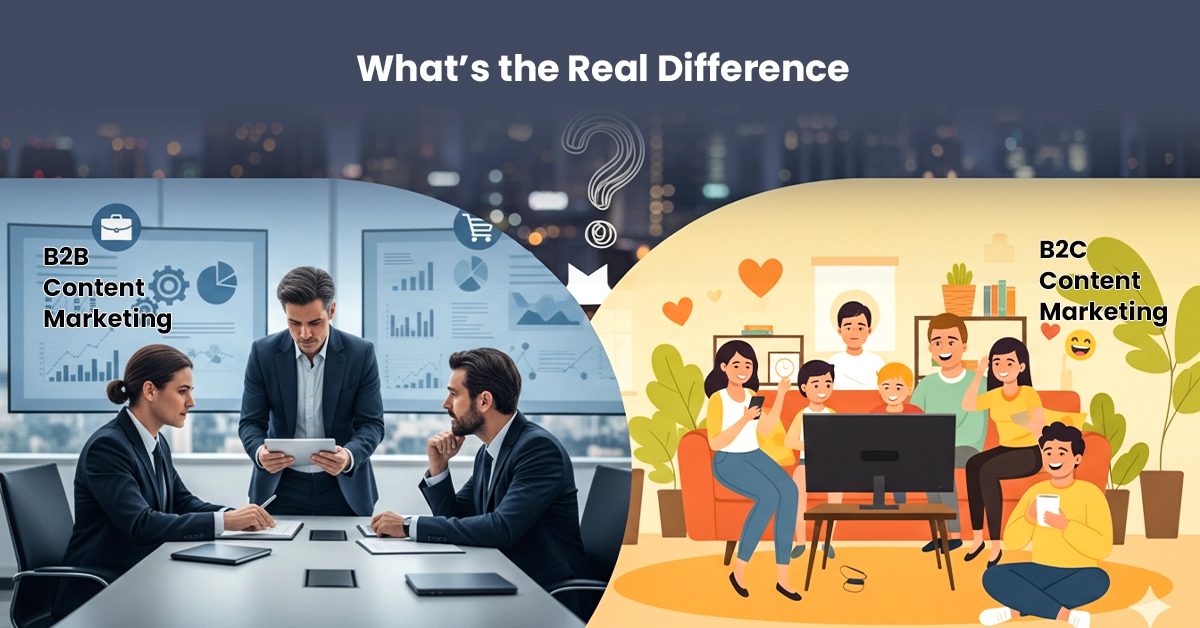
You must have seen content marketing being talked about as a single discipline. But as a business, if you do not know the difference between B2B and B2C content marketing, you might end up creating a strategy that fails.
The truth is, B2B and B2C content marketing operate on entirely different playbooks. Both aim to attract and convert audiences through high-quality content, but the “who,” “why,” and “how” behind designing the content are different.
This is why understanding the differences between B2B and B2C content marketing is necessary to create a content strategy that actually delivers results.
This guide breaks down the main differences in strategy, omats, tone, audience, distribution, and ROI to help you create content that actually works.
Key Takeaways
- B2B and B2C content marketing differ primarily in intent, not just format. B2B content builds trust over time, while B2C content supports quick emotional decisions.
- B2B content focuses on education, logic, and proof, whereas B2C content leans toward emotion, speed, and visibility.
- Decision-stage content is important. Brands that map content across the entire funnel see better rankings, engagement, and revenue.
What is B2B vs B2C Content Marketing?
At the surface level, both approaches use content to influence buying decisions; however, the buyer’s psychology is completely different.
- B2B (Business-to-Business) content marketing targets other businesses and provides insights, expertise, and solutions to help them make informed decisions.
- B2C (Business-to-Consumer) content marketing targets your intended audience and focuses on emotional engagement and value.

This difference shapes your every decision, from keyword research to content formats.
Differences at a Glance
| Factor | B2B Content Marketing | B2C Content Marketing |
| Audience | Decision-makers and teams | Individual consumers |
| Goal | Lead generation and trust | Brand awareness and sales |
| Buying cycle | Long and complex | Short and fast |
| Content focus | Educational and data-driven | Emotional and visual |
| Platforms | LinkedIn, blogs, and email | Instagram, TikTok, and YouTube |
| Metrics | ROI, leads, and conversions | Engagement, reach, and sales |
Audience Targeting: Decision-Makers vs Consumers
B2B Audience Targeting
B2B content is created for professionals. Sometimes multiple stakeholders are involved in one purchase. These individuals are
- Looking for solutions to specific problems
- Comparing vendors
- Justifying decisions internally

This is why the B2B content marketing strategy focuses on clarity, expertise, and credibility.
B2C Consumer Targeting
B2C audiences are individuals who are making personal choices. They take into account the following when making the decision.
- Emotions
- Identity
- Convenience
- Price Sensitivity

Here, the goal of B2C content is to connect quickly and leave a strong impression.
Buying Cycle Differences and the Role of Content
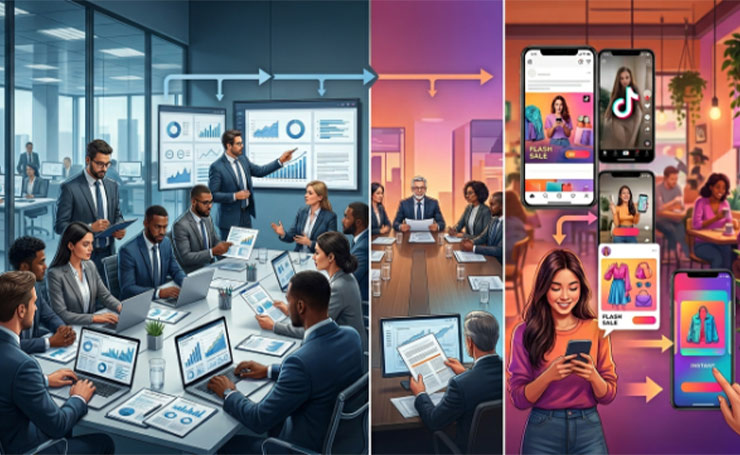
B2B Buying Cycle Content
The B2B buying cycle can last weeks or months. Content is important for every stage, including
- Early research
- Vendor comparison
- Risk evaluation
- Final approval
This is why B2B content should first educate, then sell.
B2C Buying Cycle Content
In contrast, B2C buying cycles are short because there is usually one individual making the decision. Sometimes a single piece of content, whether an ad, video, or post, can trigger a purchase immediately.
This difference is a major factor that impacts content depth and frequency.
Content Goals: Lead Generation vs Brand Awareness

B2B Lead Generation Content
The main goal is getting qualified leads. This includes offering downloadable resources, email signups, product demos, and consultation requests. B2B content marketing success is all about lead quality, not virality.
B2C Brand Awareness Content
B2C content focuses mainly on visibility, recognition, and desire. The first success signals are engagement and reach, as sales follow quickly.
Content Formats That Perform Best

B2B Content Formats
As B2B audiences prefer depth and clarity, the following content formats are suitable as they signal authority.
- Case studies
- White papers
- Long-form blogs
- Webinars
- Industry reports
B2C Content Formats
B2C audiences prefer speed and visuals. Oftentimes, social media videos outperform static content. The best formats include
- Short-form videos
- Social media posts
- Influencer collaborations
- Interactive stories
Content Tone and Messaging Style
Tone and messaging style are extremely important in both B2B and B2C content. It is important that it aligns perfectly with the audience.
For B2B content, the tone should be a mix of professional and informative. The message should be solution-oriented with clear data and example support.
For B2C content, keep your tone conversational and emotional. You can also opt for a little humorous approach to make the message feel relatable to the end user.
Keyword Research Strategy: B2B vs B2C
B2B searches are specific. You should target long-tail keywords with lower volume and high conversion intent that solve users’ queries.
B2C research should focus on high-volume keywords, trending topics, and product-related searches, because visibility matters more than precision here.

Content Distribution Channels
The best distribution channels for B2B content are those that bring organic reach and help you build authority. These include LinkedIn content marketing, SEO-related blogs, email newsletters, and industry publications.
For B2C content, fast-moving platforms are perfect for distribution, such as TikTok, paid social ads, YouTube, and Instagram.
Measuring Success: ROI vs Engagement
For B2B content, the success is measured through ROI (return on investment). You need to track lead quality, conversion rate, sales pipeline influence, and customer lifetime value. Every piece of content should support revenue.

For B2C content, revenue is important. However, the success is measured through engagement metrics. As more people engage with your content, you generate more revenue. The metrics to track include likes, shares, views, click-through rate, and how many sales you generate.
Real-World Examples: B2B vs B2C Content in Action
Let’s see the difference between B2B and B2C content through real-world examples.
B2B Example
A SaaS company publishes a case study showing how a client reduced costs by 30%. This data builds trust and supports long-term lead nurturing.
B2C Example
A fashion brand posts a short Instagram reel showing a new outfit trend. The emotional appeal and beautiful visuals make the audience immediately interested, and they end up purchasing.
Both are content marketing but designed for different outcomes.
Decision-Stage Content Mapping
Most content strategies focus heavily on formats and tone, but they often overlook one important factor: how content aligns with the buyer’s decision-making journey.
The truth is that when content does not support users at every funnel stage, particularly the decision stage, it becomes difficult to generate revenue.

Effective content marketing isn’t just about attracting traffic; it is about guiding users from awareness to action (buying your product or service).
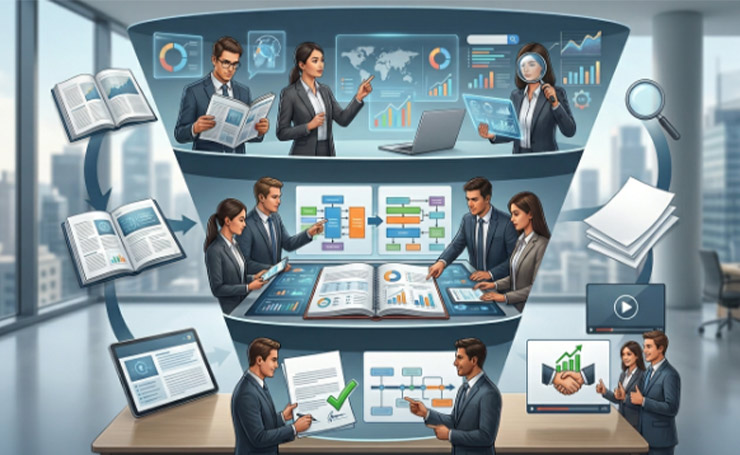
B2B Content Funnel Mapping
Awareness Stage: At this stage, potential buyers are actively identifying a problem or opportunity. So, the content should focus on educating them through informative blogs, industry insights, and thought leadership articles.
Consideration Stage: Here, users are comparing options and evaluating solutions. Content at this stage should help them see your value and why you are different from others. Use case studies, comparison guides, and in-depth solution guides.
Decision Stage: This is where most strategies fail. Content at this stage should end your user’s hesitation and reinforce your credibility. Content here should be white papers and detailed reports, product demos, customer success stories, and testimonials.
B2C Content Funnel Mapping
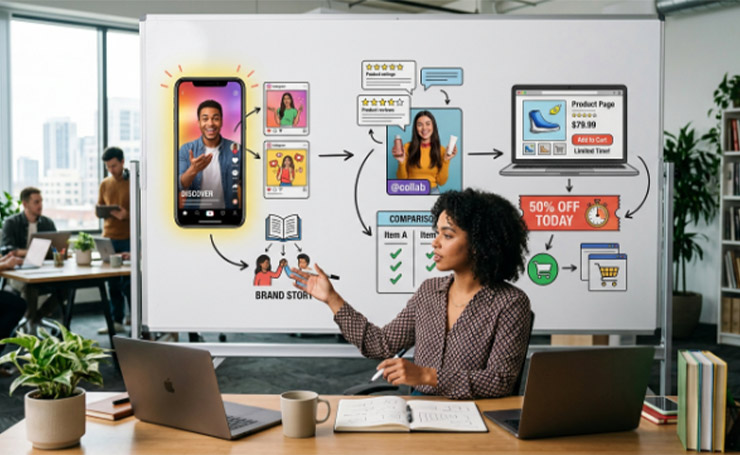
Awareness Stage: At this stage, consumers are discovering a need or interest. Content should be engaging, visually good, and easy to consume. Think short-form videos, social media posts, and brand storytelling.
Consideration Stage: Here, consumers start evaluating products/services and seeking validation. Content that will help you includes product reviews, influencer collaborations, and comparison posts.
Decision Stage: At this point, the goal is conversion. Content you create should have a sense of urgency, value, and ease of purchase. Provide customers with promotional offers, discounts, product pages with complete information, cart reminders, and retargeting ads.
Why Decision-Stage Mapping Improves Rankings
Search engines increasingly reward content that satisfies user intent, not just keywords. When your site’s content supports users at every funnel stage, it increases
- Time on site
- Engagement signals
- Conversion rates
- Topical authority
This makes your content strategy actionable and improves both search visibility and business revenue.
Which Strategy Should You Choose?
Choose B2B content marketing if
- You sell high-ticket or complex solutions
- Your buyers need education and proof
- You want to build long-term relationships

Choose B2C content marketing if
- You are selling directly to consumers
- You add emotional appeal to drive purchases
- Speed and visibility are important for your business
Conclusion
The real difference between B2B vs B2C content marketing is not only the audience, but the intent behind all the content you produce. B2B content builds trust over time, while B2C is necessary to spark emotion and fast action.
When you build a content strategy according to how your audience thinks, decides, and buys, results follow immediately.
Ready to dive into the dynamic digital world? Get all the latest information on The Digital Advice.
FAQs
Can one Business use both B2B and B2C Content Marketing Strategies at the same time?
Yes, but only if the content is designed separately for both companies and consumers. For example, if you sell SaaS tools, you should create separate content funnels, landing pages, and keyword strategies. Mixing B2B and B2C messaging on the same page can confuse users and weaken search intent signals.
How long does it take to See Results from B2B vs B2C Content Marketing?
B2B content marketing usually takes 3 to 6 months to show meaningful results because of longer buying cycles and lead nurturing. B2C content can generate results much faster, particularly through social media and promotions.
What Mistakes do Businesses Make when Switching from B2C to B2B Content?
The most common mistake is maintaining a promotional, emotionally driven tone. B2B buyers expect clarity, logic, and data. So, when switching from B2C to B2B, create content that educates and supports multi-step decision-making.
How can I choose the Right Content Format for my Audience?
To choose the right content format, start by identifying how your audience makes decisions. If they research a lot, then long-form and educational content is ideal. However, if decisions are emotional and fast, short-form, visual content will perform better.