

Customers reach businesses through various channels for their unique reasons. Each customer has their own story, priorities, and motivators. This means that what works for one customer may not necessarily work for the others.
Inbound marketing segmentation is an opportunity for businesses to connect with every customer on their level. Once you set on this path, you have a better chance of outshining your competitors and succeeding in the digital realm.
Read on to learn more about audience segmentation, why it matters, and what benefits it may have for your business.
30—Second Summary
There is no denying that modern marketing hinges on personalization. Even the best marketing campaigns may yield no beneficial results if they do not regard the unique preferences, goals, and intentions of your target audience.
While understanding types of audience segmentation and dividing your target audience based on similar interests can seem challenging, the hard work pays off when you see the final outcome.
What is Audience Segmentation?
As the name suggests, audience segmentation is the process of dividing your audience into categories based on shared traits or interests. This practice enables businesses to understand and manage their customers better.
Once you have a better understanding of your customers, you can start benchmarking current inbound marketing efforts for your business. This leads to every effort becoming more effective and visibly fruitful for the best.
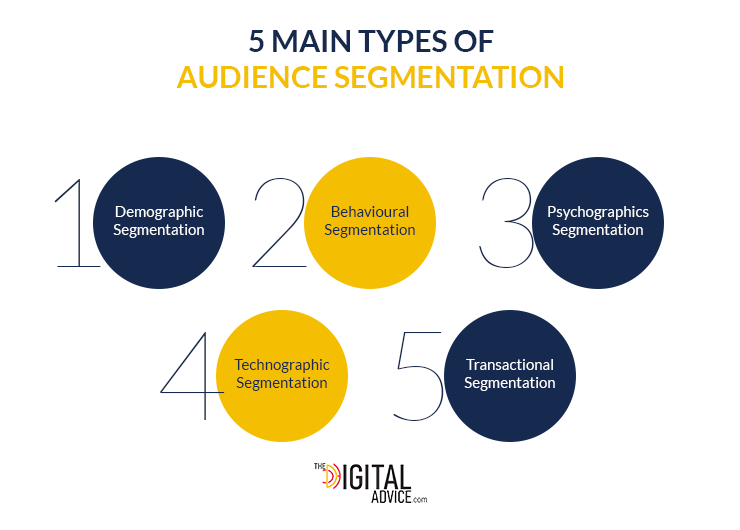
Types of Audience Segmentation
Achieving inbound engagement improvement can be made easier only when you understand the different types of audience segmentation. Once you identify the types of audience segmentation, you will be able to deliver the right content to the right people.
Demographic Segmentation
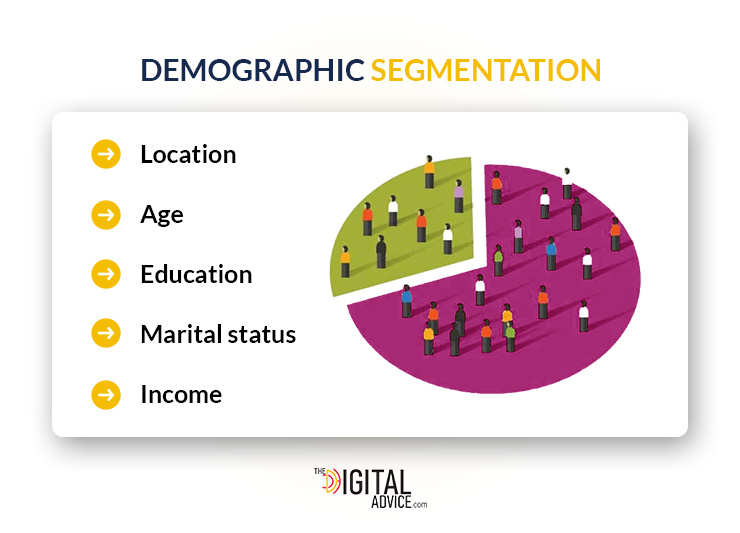
Demographic segmentation involves dividing a larger audience based on factors like location and age. While basic factors like location can be easily used in marketing efforts, more advanced demographic data points can be a challenge to handle due to GDPR regulations.
Yes, demographic segmentation can be a great way to turn your potential customers into loyal ones; it is important to navigate this terrain thoughtfully and responsibly. With meticulous adherence to privacy regulations, you could end up facing serious trouble.
Here are some potential data points to consider.
- Location
- Age
- Education
- Marital status
- Income
Behavioral Segmentation
As the name suggests, behavioral segmentation is based on the way audiences interact with your website. This means that you will have to keep an eye on what and how often people buy your products or services.
Once you successfully analyze current inbound marketing efforts, you can ensure that your message is tailored to your customers when they are most likely to convert. This approach can boost the number of conversions for your business.
Here are some potential data points to consider.
- Page visits
- Referral source
- Clicks
- Downloads
- Video plays
Psychographic Segmentation
This type of segmentation is based on your interpretation of your audience’s personality and preferences of your audience. Of course, getting inside the heads of your audience is not an achievable idea. Relying on interpretation is the best idea.
One of the best ways to segment your audience based on psychographic segmentation is by conducting surveys. It is one of the best ways to ethically segment your target audience and use the data to bypass your competitors.
Here are some potential data points to consider for psychographic segmentation.
- Replays
- Patterns
- Follows
- Hobbies
- Interests
Technographic Segmentation
Technographic segmentation may be the best way to enhance inbound marketing strategy for businesses. This type of segmentation is based on the hardware or software being used by your target audiences.
For example, if you see an emergence of tablet users among your audience, you must focus your energies on enhancing their experience. Such changes can have a significant impact on the way the users perceive your brand.
Here are some data points for technographic segmentation.
- Type of device used
- Device model
- Device Brand
- Browser
- Preferences
Transactional Segmentation
When it comes to transactional segmentation, you use your customers’ purchase history to target your marketing strategy to their needs. This can be a better approach, especially when compared to making assumptions based on their social media profiles.
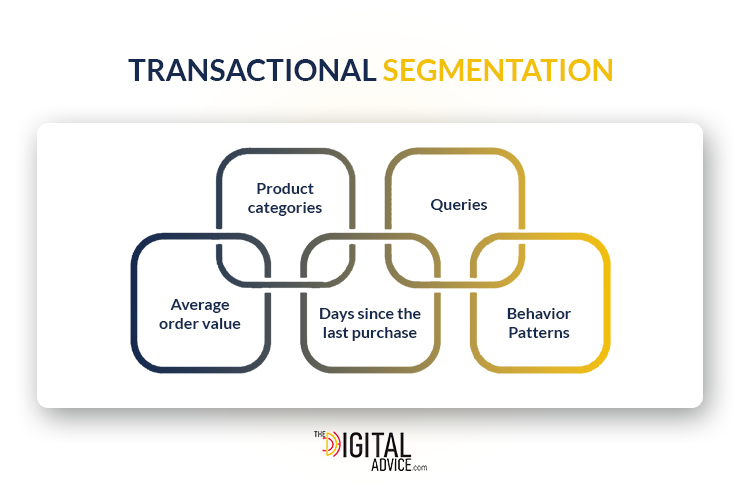
For example, if you see a customer repeatedly ordering rose bouquets, you can understand their preferences and create targeted campaigns for them. You can offer them loyalty rewards, discount codes, and other incentives to shop from you.
Here are some data points to consider for transactional segmentation.
- Average order value
- Product categories
- Days since the last purchase
- Queries
- Behavior Patterns
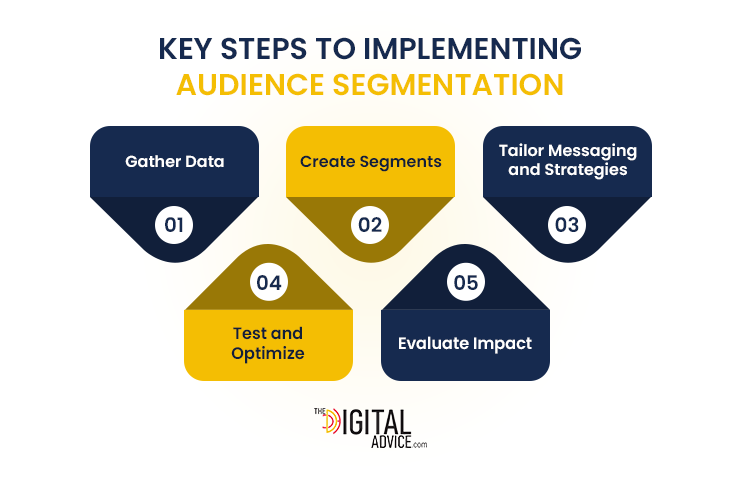
Key Steps to Implementing Audience Segmentation
To be able to enjoy audience segmentation benefits in your marketing strategy to the fullest, you must take every step with great care and consideration. Here are some practical steps for successful audience segmentation.
Identify Goals
In order to make the best of your efforts for audience segmentation, you must establish clear goals. Whether you want to increase your sales or improve customer retention rates, specifying your goals early can help you create short and long-term campaigns and strategies.
Once you understand your goals, you can approach your segmentation with broader business goals, ensuring that your efforts contribute meaningfully to your organization’s success.
Gather Data
Every successful segmentation strategy is based on data from various sources. The more data you collect, the more successful your audience segmentation will be. You can gather data from your customers in several ways.
It is always better to use mediums like surveys to gain direct feedback from customers. In addition, you can also leverage web analytics tools like Google Analytics to understand user behavior on your site.
Create Segments
Once you have gathered the necessary data and analyzed it, the next big step is to create segments. You can develop detailed profiles for each segment and capture key characteristics such as behavioral traits and psychographics.
This way, you can understand the unique needs and preferences of each segment that you have created. In the meantime, you must consider factors like the size and profitability of these segments.
Tailor Messaging and Strategies
Next, you must craft customized content that resonates with the unique needs and pain points of each audience group. This means that you will have to adjust every detail, such as the tone, style, and format of your communication.
At this point, you must also consider the most appropriate channels for reaching out to your segment. This can be email, social media, or other methods.
Test and Optimize
Testing and optimizing your segmentation strategy for success is always recommended. Inbound segmentation benefits can be maximized when you try different campaign variations and remain flexible throughout.
Once the campaign is in effect, make sure to analyze data to update segmentation criteria and stay adaptable to emerging trends.
Evaluate Impact
Lastly, it is important to regularly evaluate the impact of your segmentation efforts to ensure long-term success. You must measure the performance of your segmentation campaign against your defined objectives by analyzing key metrics such as sales growth and engagement levels.
You can also keep on gathering feedback from your customers to refine your segments and strategies further.
How to Maximize the Impact of Content Optimization and Analytics
Inbound marketing segmentation of your target audience can be a long and arduous journey. However, its positive impact on your overall inbound marketing strategy can make all the hard work worth it. Here are some tips to ensure securing audience segmentation benefits.
Personalize Based on the Segment
Aligning with the interests and preferences of your audience just on one level may not be enough. You must align with them in every possible way. From the tone you use to the way the infographics are designed, every bit of detail makes a difference.
Of course, meeting all the needs and interests of your audience can be a challenge. However, inbound segmentation optimization in every possible way may be the only reliable way to ensure the success of your campaign.
Maintain Records
When benchmarking current inbound marketing efforts, you must think about the long-term. You cannot simply enhance audience segmentation to enhance your inbound marketing efforts instantly. Getting the expected results can take some time and effort.
The best way to make things easier for yourself on the way is to maintain detailed records. The results you achieve can help you create customer personas that you can use throughout your marketing efforts.
Explore New Audience Segments
The preferences of your target audience are never stagnant. They keep changing over time. That is why you cannot rely on one-time research to promise the long-term success of your business. You must keep finding new ways to segment your audience.
Once you understand the power of innovation, you will keep on finding new ways to reach them like never before and achieve the best outcomes possible.
Stay Updated on Trends
Make sure to continuously monitor market trends and shifts in consumer behavior through industry reports and relevant blogs. You can also conduct a competitive analysis to see how others approach segmentation for their business.
Understanding and adapting your strategies according to modern trends can help your business stay relevant and even boost brand identity.
Personalize Communication
Another important detail you must keep in mind is to utilize content to customize your messaging according to individual user behaviors and preferences. This approach is key to boosting inbound engagement.
This practice helps you ensure the content is relevant, whether through personalized product recommendations or targeted email campaigns.
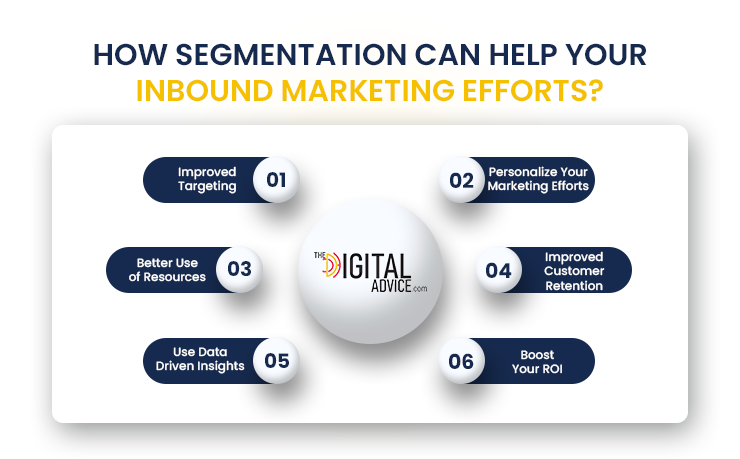
How Segmentation Can Help Your Inbound Marketing Efforts?
Having read all the information above, you may agree that analysis of current inbound marketing efforts and audience segmentation can be a lot of work. Here are all the benefits that make it worth it.
Improved Targeting
Are you still relying on generic targeting messages? If so, you do not stand a chance to stand out among the competitors. You need segmentation to increase the relevance and engagement of your content. You can be sure that your customers will appreciate it.
From helping you update your calls to action (CTAs) to email campaigns, you will surely be able to target your audience more precisely with audience segmentation. It may be the most effective way to nurture your leads and boost conversion rates.
Better Use of Resources
Even the most successful businesses may have limited marketing resources. No business wants to shoot arrows in the dark and hope for the best to happen. Since inbound marketing requires significant resources, you must use them wisely.
Whether you are worried about your time or budget, audience segmentation can help you target your audience better with only the needed resources. By focusing your efforts on the segments with the highest potential ROI, you can use all your business’s resources with care.
Use Data-Driven Insights
Audience segmentation is considered one of the best ways to enhance inbound marketing. This approach is the most valued because of the insights it provides. It can give you a more detailed view of different audience segments and how they interact with your website.
Once you have a detailed view of customer data, these insights into their preferences and buying journeys can help you improve future content creation and buyer’s journey. This means that you will eventually start caring about things that the user cares for the most.
Personalize Your Marketing Efforts
There is a growing appetite for tailored experiences that resonate on a personal level with the users. While meeting the preferences and needs of your audience on a personal level can feel impossible, you can rely on segmentation to meet this demand.
Understanding unique demographics, behaviors, and preferences can help you customize your interactions, cultivate trust, and make the best use of your inbound marketing resources. These efforts can provide long-term results.
Improved Customer Retention
When the customers feel heard and understood, they are likely to stay around for longer. When you provide them with targeted content, your team will easily connect with qualified leads, leading to an improved ROI.
In addition to boosting your ROI, providing targeted content to your customers through audience segmentation is also key to developing targeted customer retention strategies. Every step on the way can be an opportunity to nurture customer relationships with your customers.
Boost Your ROI
Inbound marketing strategies take a significant share of every business’s marketing efforts. It is one of the reasons why every marketing team wants to take every step on their inbound marketing journey with great care.
Although marketing outcomes can often result from trial and error, employing audience segmentation in inbound marketing efforts can provide a greater sense of certainty. The better you comprehend your audience, the higher return on investment you can expect to achieve.
Frequently Asked Questions
Here are the answers to some of the most frequently asked questions about audience segmentation to enhance inbound marketing efforts.
1: Why is audience segmentation important in marketing?
Audience segmentation is an essential component of an inbound marketing strategy. It allows you to gain a deeper understanding of your audience, including their needs and motivations. The better you comprehend your audience, the more effectively you can address their needs through personalized content and messaging. This can give you a competitive advantage over your competitors.
2: How does audience segmentation boost your content marketing efforts?
Once you gather data for audience segmentation to enhance your inbound marketing efforts through social media insights, website analytics, and other mediums, you can figure out what they want and need. This means that you no longer have to rely on guesses and hope for your inbound marketing efforts to pay off.
3: Do digital ads help my inbound marketing efforts?
Inbound marketing attracts and engages customers through content, focusing on their needs and interests. Its fusion with digital ads can be one of the great business secrets every business wants to learn to skyrocket its profitability. Together, digital ads and the nurturing power of inbound marketing can help you cultivate long-term customer relationships.
4: How can businesses implement audience segmentation strategies?
In order to implement a successful business segmentation strategy, you must start by collecting relevant data from your customers. Once secured, the next thing you must do is to identify segments and create content for each of these segments. After that, you can test strategies for optimization and keep records further to inform your inbound marketing strategy in the future.
5: How do analytics lead to successful audience segmentation strategies?
Understanding analytics provides valuable insights into customer behavior, preferences, and interactions. This information about how your audience engages with your content can help you consistently refine your strategies to align with market trends and better connect with your audience. As a result, you will be able to continually monitor and optimize your inbound marketing strategy for optimal results.